ISO 13485:2016 Certified
40+ Years of Excellence
600+ Products
Download Catalog
BUYER GUIDE | OBGYN SELECTION

What Is a Uterine Manipulator and Which Type Is Best?

A uterine manipulator is a gynecological instrument used to mobilize, position or elevate the uterus during selected laparoscopic procedures. Depending on its design, it may also help delineate the vaginal fornices, maintain pneumoperitoneum during colpotomy or permit injection of dye or fluid.

There is no single "best" uterine manipulator for every procedure. Selection, sizing, insertion and use must be performed by qualified clinical professionals according to the product's instructions.

ISO 13485:2016 Certified
CE Certified Quality
8 Core Types Covered
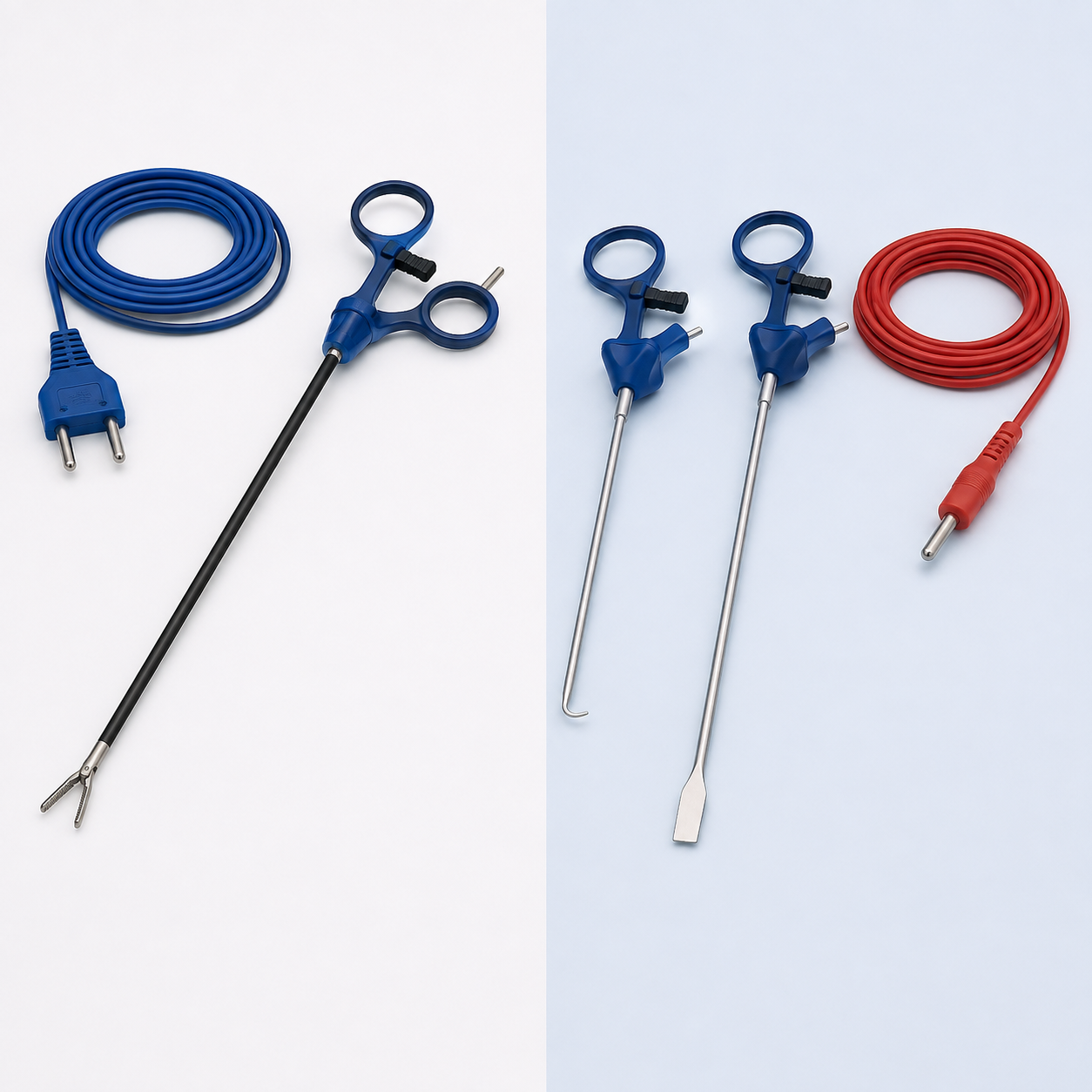
Gynecology Instruments surgical instrument on a clean clinical blue background
Quick Reference

Quick Uterine Manipulator Selection Guide

General procurement categories only—not clinical recommendations. Confirm the exact device’s intended use before selection.

Clinical or Procurement Requirement Type That May Be Evaluated
Basic uterine positioningSimple uterine manipulator or uterine probe
Diagnostic laparoscopyBasic manipulator or manipulator-injector
ChromopertubationManipulator with a dedicated dye-injection channel
Greater uterine movementArticulating manipulator
Vaginal fornix delineationCup-based hysterectomy manipulator
Maintaining pneumoperitoneum during colpotomySystem with a compatible vaginal occluder
Total laparoscopic hysterectomyProcedure-specific cup and occlusion system
Repeated hospital useReusable or modular reusable system
Immediate sterile availabilitySterile single-use system
Reusable handle with disposable patient-contact partsHybrid uterine-manipulation system
Medical-college trainingReusable system with suitable tips and training accessories
Clinical Function

What Does a Uterine Manipulator Do?

A uterine manipulator improves visualization and access to anatomical structures during laparoscopic surgery.

Positioning & exposure

During gynecological laparoscopy, the instrument may help the surgical team with:

  • Elevating and positioning the uterus
  • Moving the uterus forward, backward, or laterally
  • Presenting pelvic anatomy and creating tissue tension
  • Improving exposure of selected pelvic structures
  • Positioning the uterus during dissection

Delineation & sealing

Advanced models support specialized procedural steps:

  • Delineating the vaginal fornices to identify a colpotomy plane
  • Supporting vaginal sealing to maintain pneumoperitoneum
  • Injecting dye during chromopertubation
  • Assisting with selected diagnostic procedures

The functions available depend on the specific model. A basic uterine probe does not necessarily provide cup-based delineation, dye injection or vaginal occlusion.

Detailed Breakdown

Main Types of Uterine Manipulators

Understand the mechanical differences and procurement criteria for each type.

01

Simple Uterine Manipulator

Generally consists of a handle, shaft and intrauterine tip intended primarily for positioning or mobilizing the uterus.

May Be Considered

  • Basic movement required
  • No colpotomy cup needed
  • No dye injection needed
  • No vaginal occlusion

Buying Points

  • Tip size and length
  • Shaft angle • Movement
  • Locking reliability
  • Cervical fixation method

A simple design reduces components but may not provide features for complex procedures.

02

Uterine Manipulator-Injector

Combines uterine positioning with a dedicated channel for injecting fluid or gas when chromopertubation is required.

Typical Uses

  • Diagnostic laparoscopy
  • Fertility-related work
  • Chromopertubation

Buying Points

  • Dedicated injection channel
  • Balloon or cervical seal
  • Port identification
  • Single-use or reusable

The injection port and balloon-inflation port must be clearly identified and used according to instructions.

03

Articulating Uterine Manipulator

Allows controlled movement of the distal tip, supporting anteversion, retroversion, lateral movement, elevation and locking at selected angles.

May Be Considered

  • Wider movement required
  • Changing exposure needed
  • Difficult pelvic access

Buying Points

  • Articulation range
  • Locking stability
  • Handle controls
  • Reprocessing requirements

The articulation mechanism must remain controlled, predictable and suitable for the patient and procedure.

04

Hysterectomy Manipulator with Cup

Includes a cervical or vaginal cup used to delineate the vaginal fornices, providing a reference for colpotomy during laparoscopic hysterectomy.

Functions

  • Fornix delineation
  • Cervicovaginal exposure
  • Circumferential landmark
  • Compatible with occluder

Buying Points

  • Cup diameter range
  • Cup material
  • Energy compatibility
  • Single-use or reusable

A cup selected only by a general size description may not fit. Use the manufacturer's sizing method.

05

Manipulator with Vaginal Occluder

Includes a balloon or occlusion component intended to reduce gas leakage through the vagina during selected laparoscopic procedures.

Typical Uses

  • Total laparoscopic hysterectomy
  • Maintaining pneumoperitoneum
  • Post-colpotomy sealing

Buying Points

  • Integrated or separate
  • Inflation limits • Medium
  • Replacement availability
  • Handle compatibility

Never use a locally assumed inflation volume. Follow the product instructions.

06

Reusable Uterine Manipulator

Designed and labeled for multiple procedures after validated cleaning, inspection and sterilization. Normally includes trays and adapters.

Advantages

  • Repeated use value
  • Standardized hospital sets
  • Multiple tips available

Considerations

  • Higher initial cost
  • Reprocessing labor
  • Component tracking
  • Spare part needs

Reusable systems should be selected only when the hospital can perform the documented reprocessing process.

07

Disposable Uterine Manipulator

Intended for one use during one procedure. Commonly supplied sterile and preassembled, eliminating reprocessing steps.

Advantages

  • Sterile immediate availability
  • No reprocessing
  • Consistent device condition
  • Fewer tracked components

Considerations

  • Recurring purchase cost
  • Continuous inventory needs
  • Stocking multiple sizes
  • Shelf-life tracking

Confirm the sterility status from the label. "Disposable" and "sterile" are not interchangeable.

08

Hybrid Uterine-Manipulation System

Combines reusable hardware (like the handle) with sterile single-use patient-contact components (like tips or cups).

Advantages

  • Balances hardware cost
  • Patient-contact safety
  • Modular options

Considerations

  • Strict system compatibility
  • Must buy matching tips
  • Joint alignment care

Every component must belong to or be validated for the same compatible system.

Selection Criteria

Selecting the Correct Tip, Cup & Material

Tip and Cup Sizing

Intrauterine tips may vary by:

Diameter • Length • Shape • Flexibility • Balloon design • Connection interface • Material. Sizing must match the patient's uterine cavity length, cervical dimensions and position. Do not choose the tip solely by colour, as colour coding is manufacturer-specific.

Colpotomy cups:

Must be selected using the manufacturer's sizing method to ensure correct seating around the vaginal fornix and vaginal wall. Incorrect cups provide poor delineation or excessive tissue pressure.

Cup Material & Energy Compatibility

Energy modalities vary:

Before ordering a cup or system, confirm energy-source compatibility: Monopolar electrosurgery, Bipolar electrosurgery, Ultrasonic instruments, Laser equipment, or Mechanical colpotomy. Do not assume that a cup suitable for one energy source is appropriate for another.

Design • Motion • Ergonomics:

Articulating ranges must match exposure requirements without placing excessive strain. Check the grip comfort, control layout and locks since assistants may need to hold positions during long procedures.

Safety First

Ports, Risks and Contraindications

Dye-Injection and Balloon Ports

Some manipulators have separate connections for balloon inflation, dye/fluid injection and vaginal occluder inflation. Confusing these ports can create serious risk. Hospitals should confirm that ports are clearly identified and staff training covers the specific product.

Potential Risks:

  • Uterine perforation • Cervical/vaginal injury
  • Bleeding • Balloon-related complications
  • Infection • Component separation
  • Loss of pneumoperitoneum • Energy device interaction

When Manipulation Is Not Appropriate

A uterine manipulator is not appropriate in every gynecological patient. The surgeon must assess clinical indicators such as:

  • Pregnancy status • Uterine/cervical pathology
  • Suspected malignancy • Cervical stenosis
  • Active pelvic infection • Previous surgery
  • Patient age and perforation risk
  • Manufacturer contraindications

This page cannot establish patient-specific suitability. The final decision belongs to the responsible gynecological surgeon.

CSSD Guidelines

CSSD Reprocessing & Inspection

Reprocessing Reusable Manipulators

Reusable systems contain complex channels, articulation joints and locks. Confirm instructions cover:

  • Point-of-use handling • Disassembly
  • Cleaning, flushing and brushing channels
  • Drying, reassembly and functional testing
  • Packaging, sterilization and storage

Confirm that all components tolerate the hospital’s available process. Never sterilize a disposable part.

Pre-Use Inspection Checklist

For Reusable Components — check:

Cleanliness • Shaft condition • Tip integrity • Cup condition • Balloon and tubing • Valve operation • Articulation • Locking mechanism • Injection channel • Connectors • Seals.

For Sterile Single-Use Products — check:

Package integrity • Expiry date • Sterility status • Correct size • Complete component set • Balloon or valve integrity.

Common Procurement Mistakes

  • Buying one size for every patient: Tip and cup requirements vary; stock planning must reflect anatomical variations.
  • Confusing a probe with a complete system: Basic positioning probes do not provide fornix delineation or vaginal occlusion.
  • Mixing components from different systems: Tips, handles and cups should not be mixed unless compatibility is documented.
  • Ignoring energy compatibility: Cup materials must match the planned energy modality (electrosurgery, laser, etc.).
  • Assuming disposable means sterile: Always verify labels; some disposable items are supplied non-sterile.
  • Ignoring the ports: Incorrect inflation/injection connection can cause patient injury.

Hospital Procurement Checklist

Before standardizing a uterine manipulator, involve:

  • Gynecological surgeons and operating-room nurses
  • Infection-control team and CSSD professionals
  • Biomedical engineering and procurement managers

Evaluate:

Intended procedures, required movements, tip/cup ranges, injection/occlusion needs, energy compatibility, reprocessing capability and total cost per procedure.

Manufacturing Excellence

Uterine Manipulators from Bharat Surgical

Bharat Surgical supplies gynecology and laparoscopic instruments for hospitals, clinics, surgeons, dealers, distributors and medical colleges.

Exact configurations, sizes, intended uses, reusable status and compatible accessories should be confirmed during enquiry.

ISO 13485:2016 Certified Quality Management System
ISO Registration Number: RQMD91/11579 (Expiry: 11 Sept 2027)

CE Certificate No. 9277
Scope: Manufacture of laparoscopy, urology, ophthalmic, gynecology, neuro, ENT, orthopaedic and general surgery instruments. (Expiry: 15 April 2028)

GSTIN: 27ADFPA5321C1ZA (Maharashtra)

Bharat Surgical will not represent a component as universally compatible with another manufacturer's system without documented confirmation.

Buyer’s RFQ Checklist

Include the following in your enquiry:

  • Hospital, clinic or institution name • Delivery PIN code
  • Intended procedure • Diagnostic or operative requirement
  • Required movement • Fixed or articulating design
  • Tip sizes and cup sizes required
  • Colpotomy-cup • Vaginal-occluder requirement
  • Dye-injection requirement • Energy modality
  • Reusable, disposable or hybrid preference
  • Sterile or non-sterile requirement • Quantity
  • Replacement components • Target delivery date
  • Sample or clinical evaluation requirement
Got Questions?

Frequently Asked Questions

Quick answers to the most common questions about uterine manipulator selection and procurement.

It is an instrument used to position, mobilize or elevate the uterus during selected gynecological procedures.

It may improve uterine mobility, tissue tension and visualization. Some designs also provide dye injection, fornix delineation or vaginal occlusion.

The best type is the one intended for the procedure, compatible with the patient’s anatomy and capable of providing the required movement and additional functions.

No. Its use depends on the surgical approach, patient factors, surgeon judgement and device instructions.

It has a movable distal section or tip that allows controlled repositioning of the uterus.

It combines uterine positioning with a dedicated channel for injecting approved fluid or gas during selected procedures such as chromopertubation.

It is a cup-shaped component used in selected hysterectomy systems to delineate the vaginal fornices and provide a reference around the cervicovaginal junction.

Different sizes help accommodate anatomical variation. The appropriate cup must be selected using the manufacturer’s sizing method.

It is a component intended to reduce gas leakage through the vagina during selected laparoscopic procedures. It may be integrated or supplied separately.

Reusable, disposable and hybrid systems are available. Check the intended-use label for every component.

It combines reusable hardware, such as a handle, with disposable patient-contact components such as tips, cups or occluders.

Not automatically. Confirm sterility from the product label and packaging.

Only when compatibility is explicitly documented. Similar connectors or appearance do not establish compatibility.

No. Tip selection depends on anatomy, procedure and the manufacturer’s sizing instructions.

Only a model with a dedicated, approved injection channel should be used for that function.

It is a clinical procedure in which an approved fluid is introduced through the uterine or cervical route to evaluate tubal passage. It must be performed by qualified clinicians.

Potential risks include perforation, cervical or vaginal injury, bleeding, incorrect placement, balloon complications, infection and tissue injury from excessive force.

Use only the cleaning and sterilization process stated in the exact product’s instructions.

Bharat Surgical supplies available uterine manipulators and related gynecology instruments. Exact models, sizes and components should be confirmed during enquiry.

Provide the procedure, required movement, tip and cup sizes, dye-injection or occlusion requirement, energy modality, reusable or disposable preference, quantity and delivery location.

Request a Uterine Manipulator Quotation

Send Bharat Surgical the required movement, tip/cup sizes, injection/occlusion needs, energy modality, preferred system type and quantity.