ISO 13485:2016 Certified
40+ Years of Excellence
600+ Products
Download Catalog
BUYER GUIDE | MATERIAL & LIFECYCLE DECISION

Reusable vs Disposable Instruments

Reusable laparoscopic instruments are designed for repeated use after approved cleaning, inspection and sterilization. Disposable laparoscopic instruments—also called single-use instruments—are intended for one procedure or one patient and must be discarded according to their labeling and applicable biomedical-waste rules.

Neither option is automatically better for every hospital. The right choice depends on surgical volume, instrument design, procedure requirements, sterilization facilities, turnaround time, maintenance capacity, supply reliability and total cost per procedure. Hospitals often use a hybrid model: reusable instruments for frequently performed tasks and selected disposable components when sterility, immediate availability or a specialized design is the priority.
ISO 13485:2016 Certified
CE Certified Quality
Cost & Lifecycle Analysis
Gynecology Instruments surgical instrument on a clean clinical blue background
Quick Matrix

Quick Comparison: Reusable vs Disposable

The instrument’s instructions for use, intended-use designation and applicable hospital or regulatory requirements must take priority over general comparisons.

Factor Reusable Instruments Disposable Instruments
Intended use Multiple procedures after approved reprocessing One procedure or one patient, according to the label
Initial purchase cost Usually higher Usually lower per instrument
Recurring cost Cleaning, sterilization, inspection, repair and eventual replacement New instrument cost, storage and disposal for every procedure
Sterility Must be correctly reprocessed before reuse May be supplied sterile; confirm the product label
Turnaround Depends on CSSD capacity and instrument availability Usually ready for use when supplied sterile and unopened
Performance Depends on instrument condition and maintenance A new device is used for each intended procedure
Inspection Required before and after use Package, expiry date and device condition must still be checked
Maintenance May require sharpening, alignment, insulation testing or part replacement Normally not repaired after use
Inventory planning Requires enough sets to cover reprocessing cycles Requires continuous stock replenishment
Supply-chain exposure Lower recurring dependence after adequate reusable inventory is established Greater dependence on recurring deliveries
Waste Creates reprocessing-related resource use and eventual instrument waste Creates packaging and device waste after each procedure
Best suited for Facilities with consistent surgical volume and validated reprocessing capacity Selected procedures, emergency stock or facilities without suitable reprocessing infrastructure
Durable Systems

What Are Reusable Laparoscopic Instruments?

Reusable laparoscopic instruments are designed and labeled to withstand multiple clinical uses and the specified reprocessing cycle. Depending on the product, they may include:

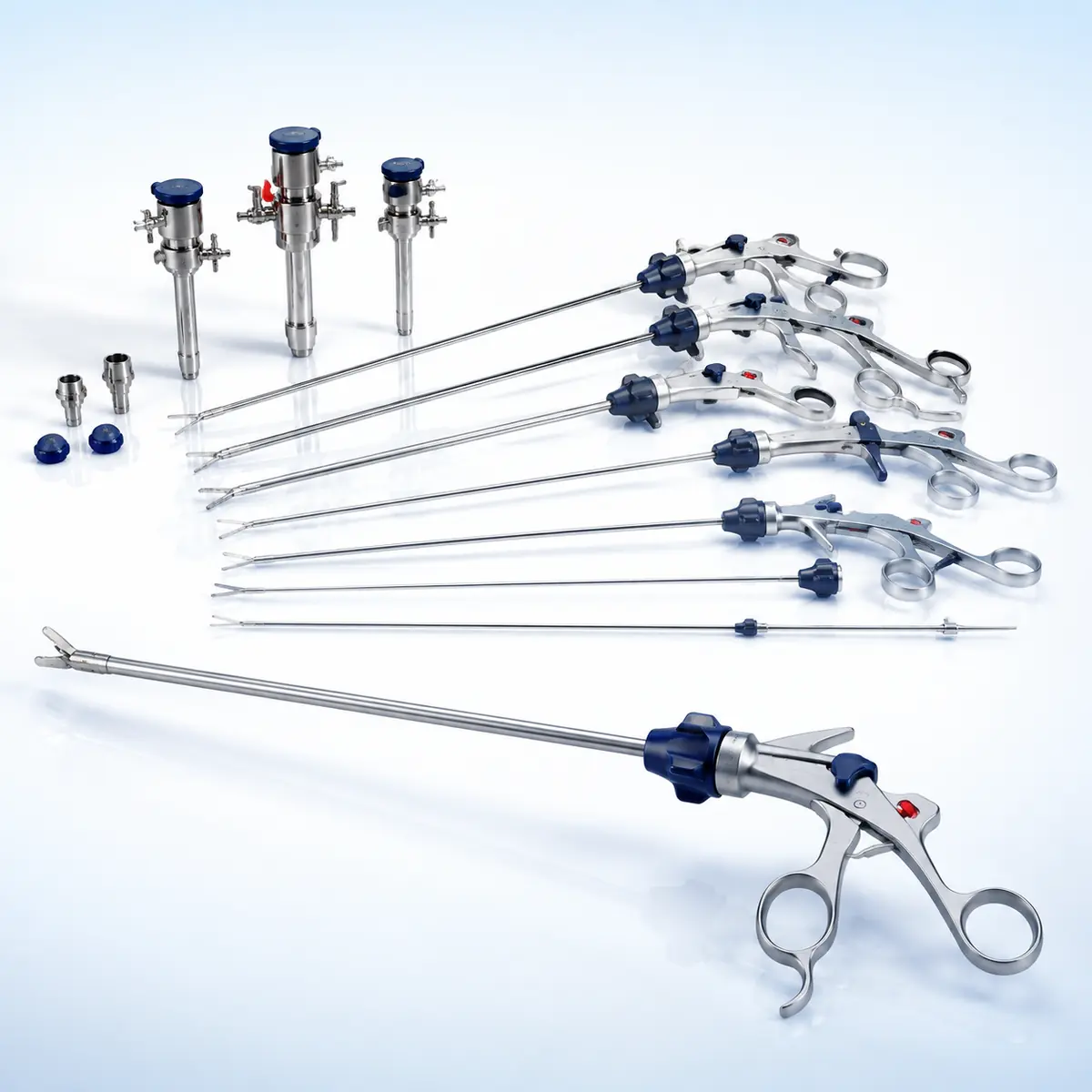
  • Laparoscopic graspers and dissectors
  • Reusable laparoscopic scissors
  • Needle holders • Clip applicators
  • Suction and irrigation instruments
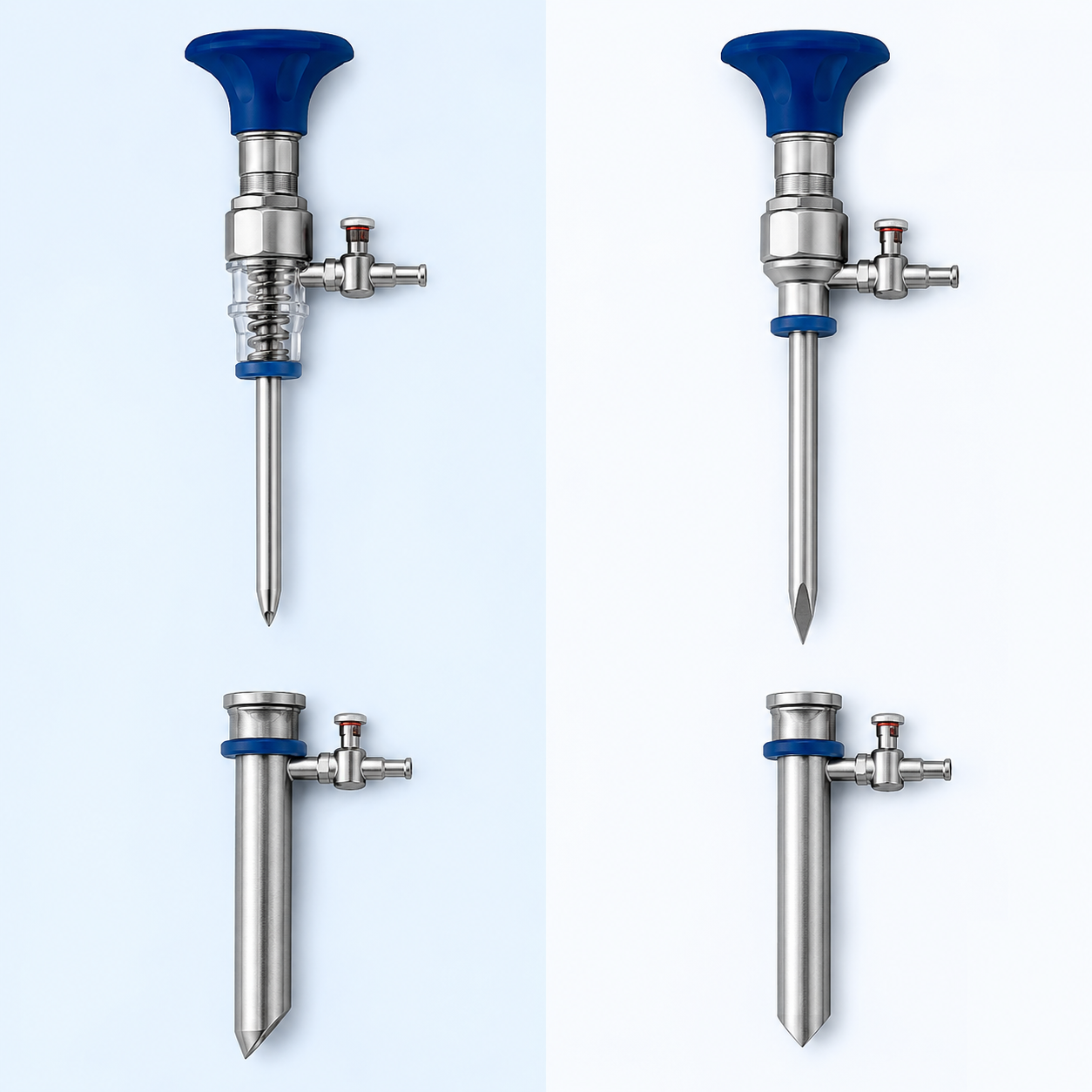
  • Reusable trocar components • Knot pushers
  • Monopolar and Bipolar hand instruments
  • Veress needles • Uterine manipulators

The FDA describes reusable medical devices as devices designed and labeled for multiple uses after appropriate reprocessing. It also stresses that inadequate cleaning can leave biological material that may interfere with subsequent sterilization or disinfection. (FDA: Reprocessing of Reusable Medical Devices)

* A reusable instrument is not ready for another procedure merely because it appears clean. It must pass through the manufacturer-specified cleaning, inspection, disinfection or sterilization process before reuse.

What Are Disposable Laparoscopic Instruments?

Disposable or single-use laparoscopic instruments are intended for one use or for one patient during one procedure, as stated on their labeling.

Examples may include certain:

Trocars and cannulas • Safety trocars • Suction and irrigation sets • Scissors • Graspers • Specimen-retrieval bags • Sealing or energy-device accessories • Clip cartridges • Tubing sets • Reducers, seals and valves

FDA Single-Use Designation:

The FDA defines a single-use device as one intended for one use or for a single patient during one procedure. Reprocessing such products is a separate, regulated activity and is not equivalent to routine cleaning performed for a reusable device. (FDA: Reprocessed Single-Use Device FAQs)

* A disposable product should not be assumed to be reusable merely because it looks undamaged after a procedure.

When Reusable May Be Suitable

A hospital should consider reusable instruments when it:

  • Performs laparoscopic procedures regularly
  • Has a capable CSSD or sterile processing department
  • Can follow the instrument’s validated reprocessing instructions
  • Has trained cleaning and inspection personnel
  • Can maintain adequate backup sets
  • Tracks use, repairs and instrument condition
  • Wants to evaluate costs over the complete product lifecycle

When Disposable May Be Considered

A facility may consider disposable instruments when it:

  • Has limited reprocessing capacity
  • Requires immediate sterile availability
  • Performs certain procedures infrequently
  • Needs a specialized instrument for a particular case
  • Wants to reduce instrument turnaround dependencies
  • Can maintain reliable recurring stock
  • Has an appropriate biomedical-waste process

The Practical Hybrid Strategy

A mixed procurement strategy is often more practical than selecting only one category for every laparoscopic procedure. For example, a hybrid approach may use:

  • Reusable graspers, dissectors and needle holders
  • Reusable hand instruments with replaceable parts
  • Disposable seals, tubing or procedure-specific accessories
  • Disposable trocars for selected cases
  • Reusable instruments for routine, higher-volume procedures
  • Single-use backup instruments for emergencies or peak demand
Clinical Performance

Clinical Performance and Instrument Condition

The reusable-versus-disposable decision should not be made on price alone. Surgeons and procurement teams should assess:

1. Mechanical Integrity

Check jaw alignment, grasping strength, tip profile, cutting performance, handle ergonomics, rotational movement, and shaft rigidity.

2. Wear and Tear

A properly maintained reusable instrument supports consistent performance. However, wear can affect jaws, hinges, insulation, cutting edges, connectors and moving parts.

3. Sterile Out-of-Box

Disposable instruments provide a new unit for each procedure, but performance can still differ between manufacturers. Technical evaluations are recommended before bulk orders.

CSSD Protocol

Reprocessing Reusable Laparoscopic Instruments

Reusable laparoscopic instruments can contain long shafts, joints, channels, insulation and narrow internal areas. These features may make cleaning more demanding than cleaning simple open surgical instruments. Follow product-specific instructions for:

  • Point-of-use handling • Safe transport to decontamination
  • Disassembly (when required) • Manual/automated cleaning
  • Flushing of channels and ports • Rinsing and drying
  • Visual and functional inspection • Packaging
  • Sterilization • Storage and release for use

* Reprocessing is detailed and device-specific. Water quality, cleaning agents, equipment, and staff training all affect quality. (FDA: Factors Affecting Quality of Reprocessing)

Pre-Procedure Inspection Check

For Reusable Instruments, check:

  • Cleanliness • Corrosion, staining, pitting
  • Cracks, dents • Jaw alignment • Ratchets/handles
  • Shaft straightness • Rotation mechanism
  • Insulation damage • Flush ports • Electrical connectors

For Disposable Instruments, check:

  • Package integrity • Sterility indicators • Expiry date
  • Transit damage • Device integrity • Compatibility

* Any instrument with suspected damage, contamination or failure should be removed from clinical use.

Procurement Cost Analysis

Cost Comparison: Look Beyond Purchase Price

A reusable instrument can have a higher purchase price but may be used across multiple procedures. A disposable instrument may have a lower unit price but creates a new purchasing requirement for every procedure.

Reusable Cost Per Procedure

Cost = (Purchase + Reprocessing + Inspection + Maintenance/Repair + Replacement/Downtime) ÷ Actual Service Uses

Do not assume a fixed number of uses for a reusable instrument unless supported by instructions, service-life records, and actual instrument condition.

Disposable Cost Per Procedure

Cost = Unit Cost + Freight & Storage + Disposal + Expiry/Damage/Stockout Impact

Include storage space, expiration management, and single-use medical waste handling charges in this calculation.

Hidden Costs of Reusable Instruments

  • Staff time for cleaning and assembly
  • Detergents, chemical indicators and utilities
  • Sterilization equipment use & maintenance
  • Packaging and tray materials
  • Inspection equipment and insulation testing
  • Repairs, sharpening, and replacement parts
  • Backup inventory and tracking systems
  • Procedure delays caused by unavailable sets

Hidden Costs of Disposable Instruments

  • Repeated procurement cycles and administrative overhead
  • Freight, customs, and expedite charges
  • Storage space in sterile supply rooms
  • Expiry management and product disposal wastage
  • Packaging damage during handling
  • Emergency purchasing and supply shortage pricing
  • Biomedical-waste segregation and incineration costs
  • Staff re-training when single-use models change

Infection-Control Considerations

Disposable does not automatically mean sterile. Reusable does not automatically mean unsafe. The main risks arise when:

  • Product labeling is ignored or misread
  • Cleaning is delayed, allowing bioburden to dry
  • Internal channels are not adequately flushed
  • Instruments are not disassembled as instructed
  • Incorrect chemicals or sterilization cycles are used
  • Damaged insulation or components are missed
  • Single-use devices are reused without validation

Environmental Considerations

Disposable instruments create device and packaging waste. Reusable instruments reduce disposal but require water, detergents, energy, packaging and sterilization resources. Environmental impact depends on:

  • Instrument material and weight
  • Manufacturing and transportation footprint
  • Number of actual reusable cycles achieved
  • Reprocessing method • Packaging selection
  • Water and energy sources at reprocessing facility
  • Local waste-treatment and recycling practices
  • Repairability and prevention of premature disposal
Decision Framework

Instrument-by-Instrument Selection

Assess every instrument category separately rather than making one decision for the entire laparoscopic department.

  1. Confirm intended use: Verify if the exact product code is labeled reusable or single-use.
  2. Review procedure requirements: Identify the operation, access diameter, working length, energy requirement and surgeon preference.
  3. Evaluate case volume: High-volume instruments may justify reusable sets. Low-volume specialist items may need single-use.
  4. Audit reprocessing capacity: Verify the hospital has the equipment, chemicals, brushes and training required.
  5. Assess turnaround time: Calculate how many complete sets are needed to cover operating lists during CSSD reprocessing.
  6. Review maintenance support: Check if repairs, alignment, sharpening and replacement parts are available.
  7. Calculate total cost per use: Factor purchase, freight, processing, repair, and downtime.

Note on Compatibility: A reusable handle does not automatically work safely with any disposable insert, cartridge or accessory. Every combination must be confirmed as compatible.

Information to Include in Your RFQ

Please provide:

  • Hospital or institution name • Delivery PIN code
  • Instrument name • Reusable or disposable requirement
  • Sterile or non-sterile requirement
  • Procedure or clinical application
  • Diameter • Working length • Jaw or tip pattern
  • Handle type • Energy compatibility (if applicable)
  • Required connector or cable type
  • Quantity • Sample or evaluation requirement
  • Billing and GST details

* For disposable instruments, also specify the required pack size, sterility status, and acceptable shelf-life conditions.

Quality Checked Instruments
Quality Management

Quality Standards & Certifications

Bharat Surgical manufactures and supplies reusable surgical instruments under strict quality monitoring systems.

ISO 13485:2016 Certification
ISO Registration Number: RQMD91/11579 (Expiry: 11 Sept 2027)

CE Certificate No. 9277
Scope: Manufacture of laparoscopy, urology, ophthalmic, gynecology, neuro, ENT, orthopaedic and general surgery instruments. (Expiry: 15 April 2028)

GSTIN Registration: 27ADFPA5321C1ZA (Maharashtra)

CE applicability and supporting documents must be confirmed for the specific instrument being quoted. (Internal link: Explore Laparoscopic Range)

Got Questions?

Frequently Asked Questions

Find immediate answers to common operational questions regarding reusable and disposable laparoscopic instruments.

Reusable instruments are designed and labeled for multiple uses after approved reprocessing. Disposable instruments are intended for one use or one patient during one procedure, according to their labeling.

They may have a lower cost per procedure when used frequently and correctly maintained, but this is not guaranteed. Cleaning, sterilization, staff time, inspection, repairs, replacement and backup inventory must be included in the calculation.

Disposable instruments avoid between-patient reprocessing after their intended use, but they are not automatically safer in every circumstance. Package integrity, sterility status, expiry, correct use and product quality still matter. Correctly reprocessed reusable instruments can also be appropriate.

Do not reuse a single-use instrument merely after cleaning it. Follow the product label, applicable regulations and the hospital’s approved policies. Reprocessing a single-use device is a distinct activity requiring appropriate authorization and validation.

No. Sterility must be confirmed from the product label and packaging. Some single-use products may be supplied non-sterile.

No. Reusable instruments remain subject to wear, damage, corrosion and performance deterioration. Their condition must be assessed before use, and any stated service-life limitations must be followed.

There is no universal number for every instrument. It depends on the device design, manufacturer’s instructions, permitted reprocessing method, handling, maintenance and actual condition.

Graspers, dissectors, scissors, needle holders, knot pushers, suction-irrigation instruments and certain trocar components may be offered as reusable designs. Confirm the status of the exact model before purchasing.

No. Reusable, disposable and hybrid trocar systems may be available. Their components and instructions are not interchangeable unless the manufacturer specifically confirms compatibility.

Check cleanliness, shaft condition, jaw alignment, handle movement, rotation, connectors, insulation, cutting performance and the presence of all components according to the manufacturer’s instructions and hospital protocol.

Residual blood, tissue and other material can interfere with the effectiveness of subsequent disinfection or sterilization. Cleaning and sterilization are separate stages, and both must be performed correctly.

No. The permitted method and parameters depend on the product’s materials and design. Follow the current instructions for the exact instrument.

It is the planned use of reusable instruments for some functions and single-use instruments or components for others. Compatibility and intended-use labeling must be confirmed for every combination.

That depends on procedure volume, CSSD capacity, instrument turnaround, available staff, supply reliability and cost. A small hospital may still use reusable instruments if it has appropriate reprocessing capability.

Reusable instruments may offer lifecycle advantages in some high-volume settings, but adequate quantities, inspection, reprocessing and maintenance are essential. Some disposable components may still be practical.

They may require alignment, sharpening, insulation assessment, component replacement or other servicing during their working life. Repair needs depend on design, use and handling.

Compare the exact product code, reusable or disposable status, sterility, dimensions, material, compatibility, packaging, quantity, warranty, documentation, maintenance requirements and total lifecycle cost.

Only when compatibility has been explicitly established. Similar appearance or matching diameter alone does not confirm safe mechanical or electrical compatibility.

Bharat Surgical supplies reusable laparoscopic and other surgical instruments. Exact models, specifications, availability and documentation should be confirmed during the enquiry.

Send the instrument names, procedure, reusable or disposable preference, sizes, working lengths, jaw patterns, compatibility details, quantities, delivery location and required documentation.

Request a Laparoscopic Instrument Quotation

Compare reusable and disposable laparoscopic instruments, sizes, compatibility requirements, and request a quotation for your hospital or distribution network.