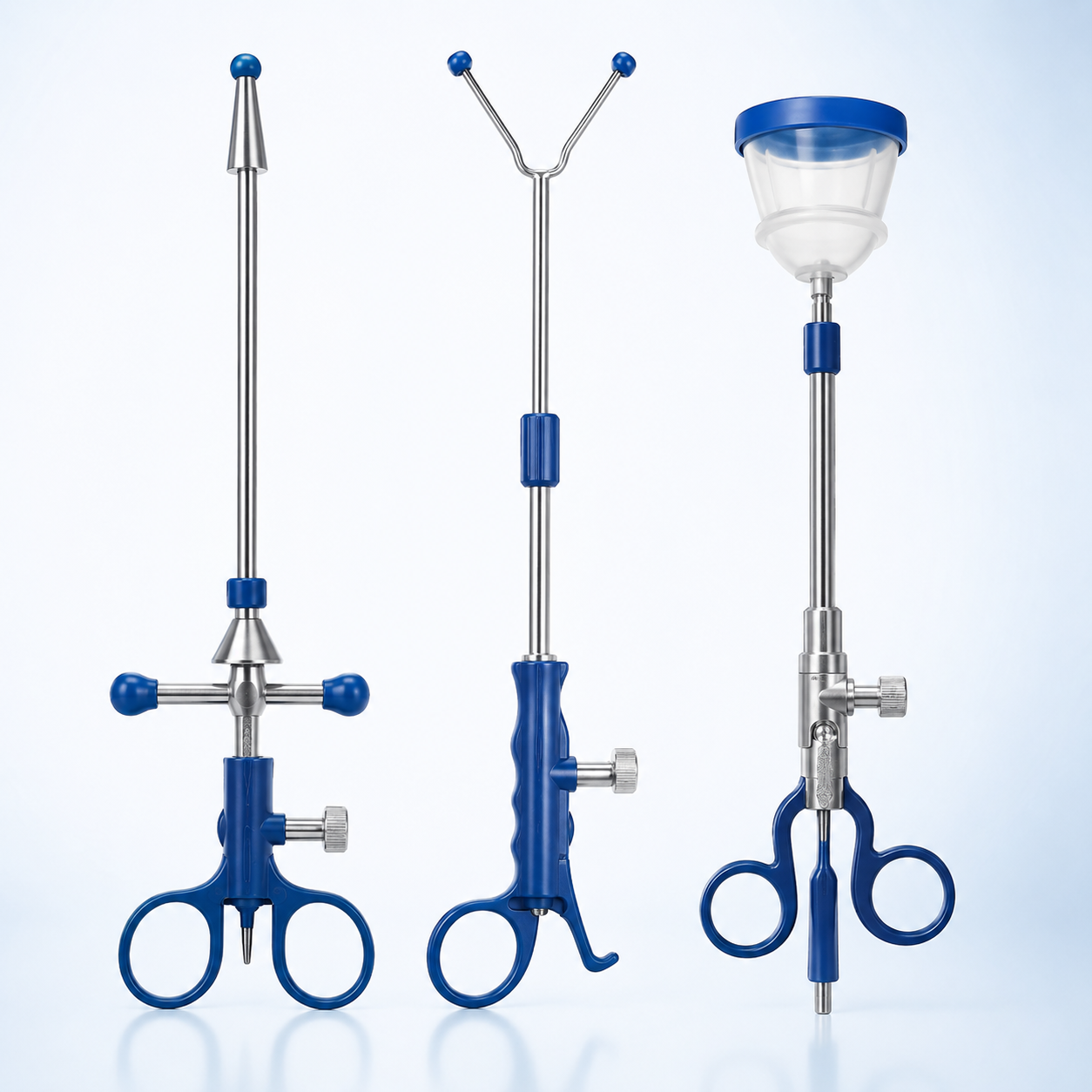
The main difference between monopolar and bipolar laparoscopic instruments is the path taken by the electrosurgical current. With monopolar, current travels from the active electrode through the patient to a return electrode. With bipolar, both electrodes are incorporated into the instrument itself.
Neither technology is automatically better or risk-free. Selection must consider the procedure, tissue, desired effect, generator, instrument, cable, connector, return electrode requirements and manufacturer instructions.
This comparison is general. Exact characteristics depend on the generator, waveform, mode, power selection, electrode geometry, application time, tissue condition and individual instrument.
| Factor | Monopolar Instruments | Bipolar Instruments |
|---|---|---|
| Current path | From active electrode through the patient to a return electrode | Primarily between two electrodes incorporated into the instrument |
| Patient return electrode | Normally required | Generally not required for bipolar-only activation |
| Common functions | Cutting, dissection, fulguration and coagulation (depending on device and mode) | Localized coagulation; selected devices also seal or divide tissue |
| Common laparoscopic forms | Hook, spatula, electrode, scissors, dissector and compatible grasping instruments | Forceps, graspers, dissectors and advanced sealing instruments |
| Tissue contact | May use a single active tip | Tissue is normally held or contacted between two poles |
| Area of effect | Can be broader depending on instrument, mode and technique | Usually concentrated around the jaws or electrodes |
| Main accessories | Generator, active cable, instrument and return-electrode system | Generator, compatible bipolar cable and instrument |
| Insulation | Critical along the active shaft | Insulation and jaw integrity remain important |
| Typical procurement risk | Incorrect connector, cable, return pad or generator compatibility | Confusing standard bipolar coagulation with advanced vessel sealing |
| Reprocessing | Follow product-specific instructions | Follow product-specific instructions, including jaw and connector care |
In a monopolar system, the surgeon applies energy through an active electrode. Current passes through the patient and returns to the electrosurgical generator through a compatible patient return electrode.
A monopolar laparoscopic system may include:
Common monopolar instruments:
Not every instrument supports both cutting and coagulation. Verify permitted functions from the exact product documentation.
A bipolar instrument contains two electrical poles within the working end. Current passes from one electrode through the tissue contacted or held by the jaws to the other electrode.
A bipolar laparoscopic system may include:
Common bipolar instruments:
A standard bipolar forceps is not automatically a vessel-sealing instrument.
Standard bipolar instruments
Commonly intended for localized coagulation between the jaws. May be used for: coagulating selected tissue, controlling small bleeding points, grasping tissue during energy application, fine dissection with compatible designs.
Advanced bipolar instruments
May use generator feedback, controlled pressure, specialized jaw construction and device-specific energy algorithms. Depending on approved intended use, they may perform: tissue sealing, vessel sealing, grasping, coagulation, tissue division using an integrated blade.
An advanced bipolar instrument normally works only with a specified generator or energy platform. Do not order it as a generic bipolar forceps.
Which system is used for cutting?
Monopolar instruments are commonly selected when cutting or dissection is required using hooks, spatulas, scissors or other active electrodes. Cutting capability depends on generator mode, instrument design, electrode geometry, tissue contact, manufacturer’s intended use and surgeon technique.
Which system is used for coagulation?
Both monopolar and bipolar technologies may provide coagulation. Monopolar coagulation is applied through hook, ball, spatula, scissors or compatible graspers. Bipolar forceps apply current to tissue held between their two poles, providing a more localized energy path.
Do not assume that every bipolar forceps can cut tissue, or that every monopolar instrument supports every generator mode.
Safe use depends on device selection, inspection, compatibility, training and compliance with the manufacturer’s instructions.
Much of the instrument shaft is outside direct view during laparoscopic application, requiring particular attention to:
This guide does not replace the generator or instrument instructions.
Although the current path is more localized, bipolar instruments can still cause unintended effects:
Only an instrument specifically designed and documented for vessel sealing should be used for that function.
Thermal spread cannot be predicted from the words “monopolar” or “bipolar” alone. Use the operating parameters specified for the compatible generator and instrument.
A laparoscopic energy instrument should never be purchased without confirming its complete compatibility chain. A plug that physically fits does not by itself prove electrical or functional compatibility.
Confirm the following before ordering any energy instrument:
Bipolar cables can differ by:
Monopolar instrument compatibility — confirm:
When ordering a cable, provide photographs only as supporting information. Final confirmation must be based on generator model, instrument product code and connector specification. Do not use unverified adapters or alter connectors.
A bipolar-only instrument generally does not require a separate patient return electrode. If monopolar and bipolar functions are used during the same procedure, requirements must be managed according to the relevant equipment instructions.
Monopolar instruments — inspect:
Bipolar instruments — inspect:
Cables — check:
Any damaged or questionable component should be removed from use and evaluated through an authorized process.
Reusable reprocessing — confirm product-specific instructions for:
Reusable vs disposable:
Reusable instruments may provide lifecycle value when the hospital can support cleaning, sterilization, electrical inspection, insulation testing, jaw maintenance, cable testing and repair. Disposable instruments provide a new device per procedure but create recurring purchasing, storage and waste-management requirements.
Smoke management may require:
Do not reuse a single-use electrosurgical device merely because it appears intact after cleaning.
Bharat Surgical supplies laparoscopic instruments and accessories for monopolar and bipolar applications. Availability and compatibility must be confirmed for the exact instrument and equipment combination.
Buyers may enquire about: Monopolar hooks, Monopolar electrodes, Monopolar graspers and dissectors, Bipolar forceps, Bipolar graspers, Bipolar cables, Electrosurgical generators, Cautery-machine accessories, Reusable laparoscopic instruments, Replacement cables and connectors, Repair and service support.
ISO 13485:2016 Quality Management System
ISO Registration: RQMD91/11579 (Expiry: 11 Sept 2027)
CE Certificate No. 9277
Manufacture of laparoscopy, urology, ophthalmic, gynecology, neuro, ENT, orthopaedic and general surgery instruments. (Expiry: 15 April 2028)
GSTIN: 27ADFPA5321C1ZA (Maharashtra)
Bharat Surgical will not represent an instrument, cable or adapter as universally compatible. Generator model, instrument code and intended application must be confirmed before supply.
Include the following in your enquiry:
* For a replacement cable, provide the exact generator model and instrument code rather than relying only on colour or photographs.
Quick answers to the most common procurement questions about bipolar and monopolar laparoscopic instruments.
Monopolar current travels from an active electrode through the patient to a return electrode. Bipolar current passes mainly between two electrodes built into the instrument.
A compatible patient return electrode is normally required. Follow the generator and instrument instructions for the exact system.
A separate return pad is generally not required for bipolar-only activation because both poles are incorporated into the instrument. Confirm the requirements of the specific generator and procedure.
Bipolar technology avoids some monopolar current-path concerns, but it can still cause thermal or mechanical injury. Neither system is safe without correct selection, inspection and use.
Monopolar hooks, scissors and electrodes are commonly used for cutting and dissection. Some advanced bipolar instruments seal and mechanically divide tissue. The required function should determine selection.
Both technologies can coagulate tissue. Bipolar instruments generally provide a more localized current path between the jaws, while monopolar instruments offer different electrode and mode options.
No. Standard bipolar coagulation forceps and advanced bipolar vessel sealers are different product categories.
Do not assume it can. Only use a device for the vessel or tissue range stated in its approved instructions.
Common options include hook, spatula, ball, needle, scissors and compatible grasping or dissecting instruments.
Options may include bipolar forceps, graspers, Maryland-style dissectors and advanced sealing-and-cutting instruments.
No. Connectors, electrical ratings and platform requirements differ. Match the cable to both the instrument and generator.
Not automatically. An adapter should be used only when its compatibility is documented by the relevant manufacturers or authorized supplier.
Damaged insulation can allow energy to escape from an unintended point along the shaft. Follow the prescribed inspection and testing process.
Yes. Bipolar instruments and their jaws can transfer heat beyond the intended contact area. Device design, activation, tissue and technique affect the result.
Some generators support both outputs, but each instrument requires the correct socket, cable, accessories and operating instructions.
Yes. Reusable monopolar and bipolar instruments are available, but they require product-specific cleaning, sterilization, inspection and electrical testing.
Many are supplied sterile, but this must be confirmed from the product label. Single-use and sterile are separate characteristics.
Provide the manufacturer, complete model number, output type, connector photographs and details of the existing instrument or cable.
Bharat Surgical supplies available bipolar cables and related electrosurgical accessories. Compatibility must be confirmed using the instrument and generator specifications.
Include the procedure, energy modality, instrument type, diameter, length, generator make and model, connector, cable, reusable or disposable requirement, quantity and delivery location.
Send Bharat Surgical your instrument requirement together with the generator make and model for compatibility review, availability and quotation.